01A name for a different way through the city
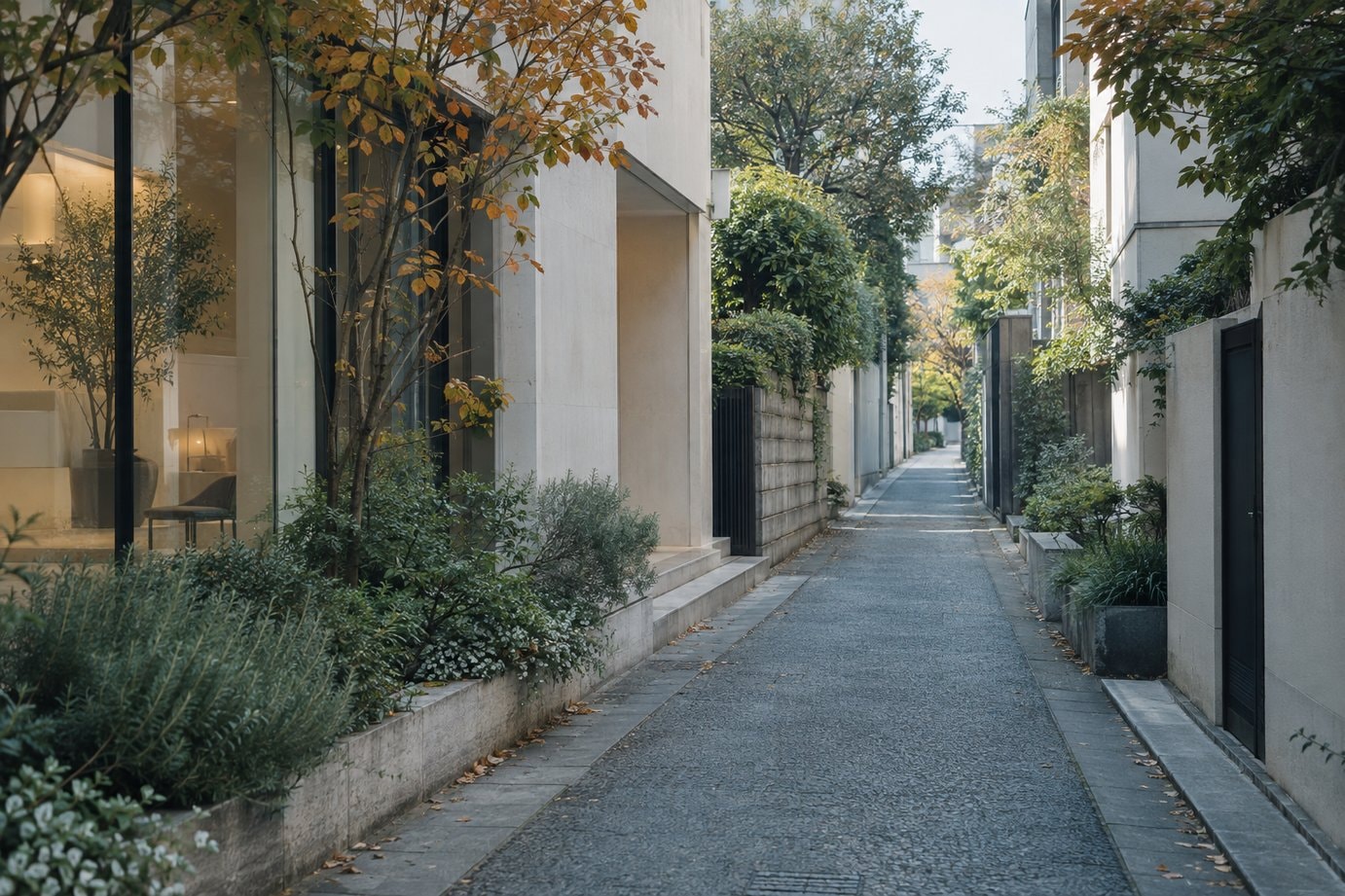
Aosando was described as a neighborhood of creative and distinctive shops, boutiques, hair salons and art galleries. Its invitation was simple: something different from everyday life could be found along this small street. The idea of leaving a familiar main road and taking a detour into the alley was central to the street’s character.
The name referred to the L-shaped back street between the two larger roads. It was a name used to introduce that street and its character, rather than an official administrative district. Aoyama and Omotesando provided the wider setting. Aosando described a smaller sequence of entrances, interiors and places to pause within it.
02Everyday spaces became exhibition spaces
The Aosando Art Fair began in 2007. Its early introduction described an event that used shop space to exhibit and sell art across different genres and nationalities. The aim was to bring activity to the street through art and to introduce the pleasure of buying work by emerging contemporary artists.
The fair described some emerging artists’ works as approachable purchases and noted that visitors had bought their first artwork there. The important relationship was between the work and an ordinary place: a shop that someone might already visit became somewhere to encounter an unfamiliar artist. Walking between shops also became a way of moving between exhibitions.
03More than an autumn event
The street’s activities extended beyond the art fair. News from 2009 described a monthly market called Aosando Ichiba, a yukata festival, seasonal sales, a temporary jewelry repair workshop and a knitwear fashion show. These were different kinds of events, but each gave another reason to spend time along the street.
The HOME PARTY program in 2013 brought together interior displays, photography, handwork, flowers, a garden cafe and musicians who moved along the street. A talk considered original photographic prints in domestic spaces. The program connected objects with the ways people gathered, shared a table and spent time together.
04Reading the street through its years
This independent record covers the Aosando area and the fair editions documented here from 2007 to 2015. The years had distinct programs. The 2011 edition included a walking event alongside painting and other performances; the 2012 edition had a 12-day period; the 2014 edition focused on photography; and the 2015 edition used the theme LOVE and PEACE.
The records were not equally complete for every year. A list of artists did not always provide a full list of venues, and a street directory was not the same as an exhibition roster. Reading the individual years kept those differences visible. The shop names on these pages belonged to their historical context, while the central subject remained the relationship between a street, its everyday spaces and the art encountered there.